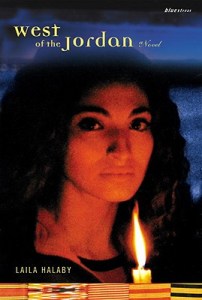
What are we missing? Feel free to add books in the comments!
Fadia Faqir is a Jordanian-British female author and should be at the top of your TBR list for this part of the world. She writes with sensitivity, depth, and grace, effortlessly translating Arab customs and cultures into novels that explore a range of topics and settings in the Middle East. Try reading any one of these:


The Cry of the Dove | In the House of Silence | Pillars of Salt | Willow Trees Don’t Weep


Publisher Description: Born in 1951 to a distinguished Arab-American family, Lisa Najeeb Halaby became the fourth wife of King Hussein at age 27. With her husband being not only Jordan’s monarch but the spiritual leader of all Muslims, Lisa was unsure what her role would be. This moving memoir provides a timely look at one woman’s story against a backdrop of 30 turbulent years: the displacement of over 1 million Palestinians by the creation of Israel, King Hussein’s frustrated efforts for peace, and the effect of Saddam Hussein and the Gulf War on Jordan and the royal family. Queen Noor offers intimate new glimpses of King Hussein, Saddam Hussein, Queen Elizabeth, Arafat, and many other world leaders.
Two other memoirs of time spent in Jordan are Married to a Bedouin by Marguerite van Geldermalsen and The Language of Baklava by Diana Abu Jaber.
What I found fascinating about Married to a Bedouin was the incredibly story hinted at in the author’s biography:
Marguerite is from New Zealand. In 1978 she met Mohammad Abdallah in Petra, Jordan, married him and moved into his Nabataean cave. In 1985 they moved to the new Bedouin settlement, Umm Sayhoon. She was widowed in 2002. She has three children.
Doesn’t that already want to make you read more?
Diana also writes fiction that holds influences of her Jordanian life.


Thus begins Marguerite van Geldermalsen’s story of how a New Zealand-born nurse came to be married to Mohammad Abdallah Othman, a Bedouin souvenir-seller from the ancient city of Petra in Jordan. It was 1978 and she and a friend were travelling through the Middle East when Marguerite met the charismatic Mohammad who convinced her that he was the man for her.
A life with Mohammad meant moving into his ancient cave and learning to love the regular tasks of baking shrak bread on an open fire and collecting water from the spring. And as Marguerite feels herself becoming part of the Bedouin community, she is thankful for the twist in fate that has led her to this contented life.
Marguerite’s light-hearted and guileless observations of the people she comes to love are as heart-warming as they are valuable, charting Bedouin traditions now lost to the modern world.


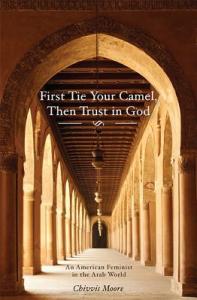

Publisher Description: On a fateful evening in 1978, Chivvis Moore, living as a carpenter in California, stops by the house of an architect friend. ”What if I wrote to Hassan Fathy?” Chivvis suggests, eager to meet the Egyptian author of the influential Architecture for the Poor. Less than three months later, Chivvis arrives in Cairo knowing virtually nothing about the culture and religion of the predominantly Muslim Middle East.
What begins as a trip to meet Hassan Fathy becomes a 16-year odyssey that stretches from a year working in the shop of a master carpenter in Egypt to fraught years teaching English in Palestine.
Offering a portrait of a land and a people not found in newspaper headlines or on television screens, First Tie Your Camel, Then Trust in God humanizes the misunderstandings, misconceptions, and tragedies that arise when we fail to appreciate the humanity at the core of us all.